Hrvatski
Power, Precision, and Key Component Maintenance
In the world of modern industry and heavy machinery, space is often limited, while demands for power and torque are exceptionally high. When standard hydraulic cylinders with linear motion cannot meet spatial or functional requirements, hydraulic rotary actuators (rotary cylinders) step in.
As hydraulics experts at Hidel d.o.o., we encounter these robust components daily. In this article, we cover everything you need to know about their operation, application, and proper maintenance.
What Is a Hydraulic Rotary Actuator and How Does It Work?
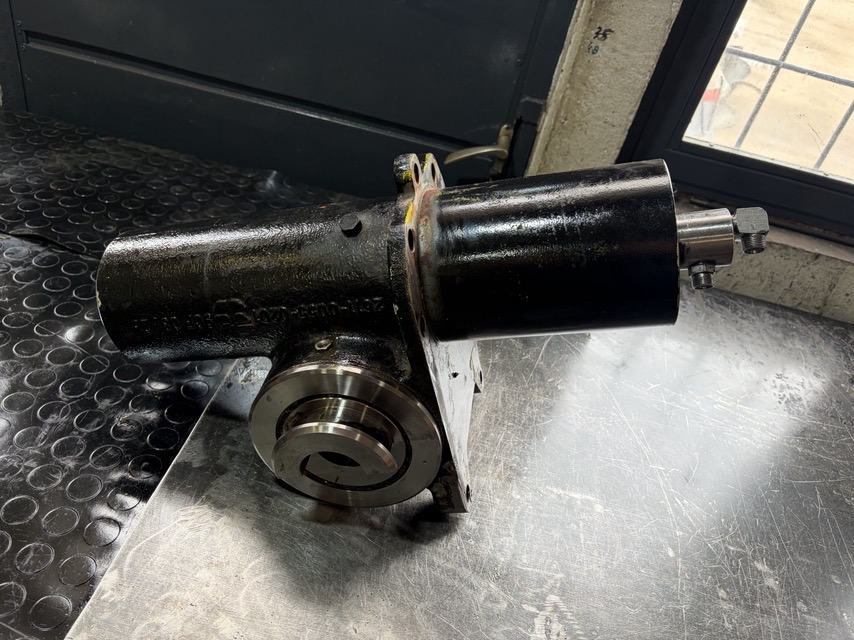
A hydraulic rotary actuator is a compact component that converts linear motion and hydraulic oil pressure into powerful, controlled rotational movement. Unlike hydraulic motors that rotate continuously, rotary actuators operate within a limited angle of rotation (most commonly 90°, 180°, or 360°).
The most popular and reliable design utilizes a helical mechanism:
- Hydraulic oil under high pressure enters the cylindrical housing through a port.
- The pressure pushes a piston featuring angled, spiral grooves (helical splines).
- As the piston moves linearly, the grooves force it to rotate, generating immense torque on the output shaft.
Where Are Rotary Actuators Used?
Thanks to their compact design and ability to withstand massive loads, these actuators are indispensable in demanding industries:
- Construction and Mining: Tilting and rotating excavator booms, tiltrotators, and controlling aerial work platforms and cranes.
- Transport and Logistics: Steering systems for forced axle steering on heavy-duty trailers (lowboys), enabling maneuvering in tight spaces.
- Agriculture and Forestry: Controlling attachments on tractors and forestry log loaders.
- Industrial Automation: Precise turning, flipping, and positioning of heavy workpieces in manufacturing plants.
The Key to Success: Proper Hydraulic Oil and Maintenance
Since high friction occurs under high pressure within a helical actuator, the choice and condition of the hydraulic oil directly impact the component’s lifespan.
To prevent costly breakdowns and downtime, adhere to these maintenance guidelines:
- Correct Viscosity: Use only hydraulic oils of the specified grade (most commonly ISO VG 46 or VG 68, depending on operating conditions and temperature).
- Oil Cleanliness Is a Priority: Contaminants in the oil act as abrasives. They can permanently damage precision helical splines and internal seals, leading to internal oil bypass and loss of power.
- Regular Filter Changes: Replace hydraulic filters regularly to ensure that only clean oil enters the rotary actuator.
- Seal Inspection: If you notice traces of oil on connections or the output shaft, seals must be replaced before moisture and dirt enter the system.
Need Service or Advice? Hidel d.o.o. Is Your Partner
Hydraulic rotary actuators are engineered to last, but they require expert care. Whether you need a hydraulic oil change, system diagnostics, seal replacement, or sourcing new components, our team at Hidel d.o.o. is at your service.
Ensure maximum power and reliability for your machinery. [Contact us today] for a professional inspection and service of your hydraulic systems!